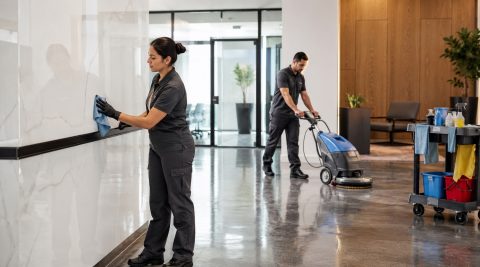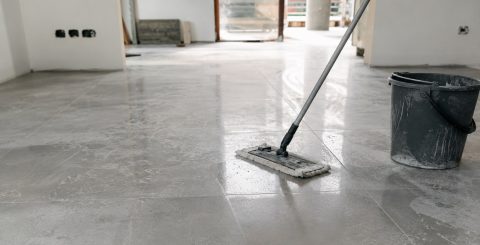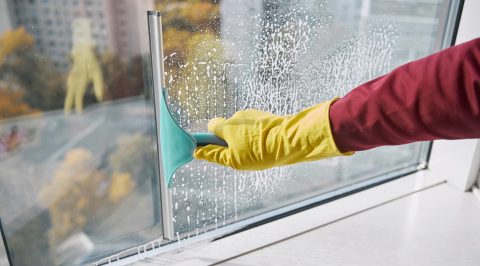
Problems with cleaning services for residential communities in Mallorca often start with small details: a staircase that doesn’t look the same every week, an elevator with visible marks, a garage that accumulates dust, a doorway that loses its appearance, or a specific complaint that ends up reaching the administrator.
In a community, cleaning isn’t just about going through the common areas. Schedules, residents, access points, cleaning materials, walkways, garages, elevators, patios, windows, entrances, and outdoor spaces all require organization. When any part of the service isn’t well-defined, problems easily arise.
In our experience, many of these situations can be prevented if the community works with a company that plans, communicates, and oversees the service. Community cleaning requires consistency, but also the ability to adapt to the actual use of the building.
Why do complaints arise regarding the cleaning of a community?
Every homeowners’ association has a different routine. Some buildings have few residents and simple common areas. Others have several entrances, elevators, garages, gardens, interior courtyards, swimming pools, communal terraces, storage rooms, outdoor areas, and a high volume of people.
When a service is presented in a generic way, it’s easy for some needs to go unmet. A budget may seem correct on paper, but if it doesn’t accurately reflect the frequency, the areas included, and the specific tasks, discrepancies will eventually emerge between what the community expects and what the company delivers.
In Mallorca, environmental factors also play a role. Humidity, dust, sand, salt air in coastal areas, leaf accumulation, heavy use during peak season, and the presence of holiday homes can all increase the need for maintenance at certain times of the year.
Therefore, a good cleaning service for homeowners’ associations shouldn’t operate automatically. It should be reviewed, adjusted, and coordinated with the property manager, president, or the person responsible for the building.
Common problems in cleaning residential communities
Next, we review the most common cases we see in many buildings and how to address them to prevent them from becoming recurring conflicts.
Lack of definition of tasks and frequencies
One of the most common problems is the lack of clarity regarding what is cleaned and how often. The community may assume that the entrance hall, stairs, elevator, windows, garage, and patios are all included in the same service, while the company may have only calculated the costs for some of those tasks.
Maintenance cleaning requires a clear schedule. Cleaning an entrance hall twice a week is not the same as cleaning a high-traffic building daily. Similarly, cleaning stairs, elevators, landings, railings, mailboxes, mirrors, windows, or exterior areas is not the same. To avoid confusion, we recommend that the proposal specify:
- Areas included: entrance, stairs, elevator, landings, garage, storage rooms, patios, access points and outdoor areas.
- Frequency by zone: daily, weekly, bi-weekly, monthly or occasional.
- Specific tasks: sweeping, mopping, dusting, cleaning doors, cleaning windows, removing waste or treating stains.
- Excluded jobs: tasks that require a separate budget or specific scheduling.
When everything is in writing, it is easier to control the service and resolve any differences of opinion.
Common areas that are not covered by regular maintenance
In many communities, the service focuses on the entrance hall, stairs, and elevator, but over time complaints arise about other areas. This could be an interior courtyard, a garage ramp, a utility room, a garbage room, a communal terrace, or a secondary entrance.
These areas often cause problems because they aren’t always used daily, but when they get dirty, it’s very noticeable. If they aren’t included in the cleaning plan, no one checks them regularly, and the accumulation of dirt becomes visible.
It’s advisable to start with a walkthrough of the entire building. It’s not enough to just look at the main areas. You need to identify spaces used only occasionally, technical areas, damp corners, places where leaves accumulate, service entrances, and areas that residents use only occasionally.
In our approach, we prefer to identify these areas from the outset. This allows us to propose a realistic cleaning schedule, even if it’s not daily. Sometimes a monthly check-up or regular cleaning is all that’s needed to keep them in good condition.
Complaints about schedules, noise or disturbances
Community life can be disrupted if cleaning is done at inconvenient times. The noise from carts, vacuum cleaners, buckets, doors, machinery, or the movement of tools can be bothersome if it coincides with rest hours or when residents are coming and going.
Problems can also arise when floors are left wet during peak hours, when an access point is blocked, or when strong-smelling products are used in enclosed areas. These are issues that can be avoided with good planning.
The cleaning schedule should be agreed upon taking into account the actual operation of the building. In some communities, it’s best to clean first thing in the morning. In others, it’s better to avoid times when school is starting, people are leaving work, deliveries are being made, or garbage is being collected.
Signage is also important. If stairs, ramps, or entrances are being cleaned, it’s advisable to warn people about the wet floor and work in sections to avoid obstructing the passage of residents.
Poorly communicated staff replacements
In recurring services, there may be vacations, absences, shift changes, or occasional replacements. The problem arises when the community doesn’t receive information or when the replacement person is unfamiliar with the building.
A change in staff can affect the outcome if there is no internal planning. Each community has its own specific characteristics: keys, access points, light switches, cleaning rooms, sensitive areas, preferred schedules, and tasks that are performed in a particular way.
That’s why a professional company like Nord Baleares has replacement protocols. The person who comes in to cover the service must know the areas, the tasks, the frequency, and any other important information about the property.
Communicating with the building manager or president helps prevent problems. It’s not always necessary to report every internal adjustment, but it’s advisable to give notice when a change might affect the building’s schedule, access, or usual routine.
Inadequate products or inconsistent results
Using the wrong products can cause stains, marks, strong odors, or damage to surfaces. A community might have marble, terrazzo, stoneware, stainless steel, aluminum, glass, wood, mirrors, natural stone, or outdoor paving. Each material requires appropriate treatment.
Sometimes the problem isn’t a lack of cleanliness, but a lack of consistency. One day the building entrance is sparkling clean, and the next day there are stains. An elevator might be thoroughly cleaned for a few weeks, and then it will show marks again. This inconsistency creates the impression that the service isn’t properly managed.
The product should be chosen according to the surface, the level of soiling, and the ventilation of the space. Proper dosage is also essential. Too much product can leave residue, while too little can reduce the effectiveness of the cleaning.
In communities with delicate materials, we recommend checking beforehand which surfaces require special care. This helps prevent damage and maintains a more polished appearance in common areas.
Incidents in garages, elevators and outdoor areas
Some areas tend to be more problematic because they are used intensively or require specific cleaning methods. Garages, parking lots, and parking areas accumulate dust, tire marks, debris, oil stains, leaves, and dirt tracked in from outside. If they are cleaned infrequently, the improvement is barely noticeable.
Elevators also require constant attention. Fingerprints on buttons, mirrors, doors, and floors are highly visible. Because it’s a small area with continuous use, any neglect is quickly noticed.
The condition of outdoor areas depends heavily on the building’s location. In Mallorca, a community near the sea may experience higher levels of salt, sand, or humidity. In areas with trees, leaves, pollen, and plant debris may require more frequent maintenance at certain times of the year.
These areas should have a different cleaning schedule. They don’t always need daily cleaning, but they do require specific planning. Garages, ramps, patios, exterior access points, and elevators shouldn’t be included under a generic mention of common areas.
How to prevent conflicts between neighbors, building managers, and the cleaning company
Most conflicts are reduced when there is good organization. The community needs to know what has been contracted, the company needs to be familiar with the building, and the building manager needs clear information to handle questions or complaints.
Review the scope of service before starting
Before starting work, it’s advisable to walk through the property and check all the areas involved. This visit allows you to identify access points, materials, schedules, sensitive areas, damp areas, windows, garages, patios, and spaces that require regular maintenance.
The estimate should translate that visit into specific tasks. If a community is hiring a stairwell cleaner, it must specify whether landings, railings, baseboards, mailboxes, doors, interior windows, or elevator cleaning are included.
This initial review helps avoid ambiguous language. The clearer the document, the easier it will be to verify that the service is being provided.
It also allows for adjusting expectations. If a community wants a very high-quality result with only a few hours of work contracted, the company should explain this before starting. Transparency at this point prevents many complaints later on.
Establish a clear communication channel
The community needs to know whom to contact if there’s an issue. This could be the building manager, the president, or a designated service coordinator. The important thing is to avoid scattered messages from multiple residents without any order or follow-up.
A clear communication channel allows for reporting incidents, prioritizing them, and resolving them more quickly. If each resident reports individually, the information may arrive incomplete, duplicated, or with different versions.
In our experience, communication works best when observations are grouped and conveyed in an organized manner. This allows us to assess whether it’s a one-off incident, a frequency adjustment, or a need not currently covered by the service.
The company’s response should also be clear. When there is a complaint, it’s advisable to review the case, explain the cause if known, and propose a solution. Trust is built through consistency and responsiveness.
Schedule periodic service reviews
A cleaning service shouldn’t only be reviewed when there are complaints. Communities change: new residents move in, garage usage increases, a common area is renovated, the seasons change, or new needs arise.
Regular reviews allow you to adjust the plan before problems accumulate. A quarterly, semi-annual, or annual review may suffice, depending on the size of the property and the complexity of the service.
During these reviews, it is possible to assess whether the frequencies are still adequate, whether any area needs reinforcement, whether there are materials that require other treatment, or whether it is advisable to schedule a special cleaning such as floor polishing.
This monitoring is very useful in large communities or those with several common areas. Keeping the service updated prevents the contract from becoming outdated in relation to the actual use of the building.
What should a community consider before changing companies?
Switching providers can be a good decision if your current service isn’t working, but it’s best to do so carefully. Before changing providers, we recommend identifying exactly what’s going wrong.
This could be due to insufficient hours, poor planning, inadequate supervision, unsuitable products, lack of communication, or expectations not clearly outlined in the contract. If the problem isn’t properly defined, the new company may inherit the same difficulties.
The community should review the current state of the service, the areas that generate the most complaints, the required frequency, pending routine maintenance, and the available budget. With this information, it will be easier to request comparable proposals.
It’s also worth considering whether the new company conducts a preliminary visit, inquires about the building’s routines, explains its methods, and presents a detailed proposal. A low-cost offer without a thorough assessment can lead to recurring problems in the short term.
The goal should not be to change for the sake of change, but to hire a better organized, clearer service that is more adapted to the community.
How we manage the cleaning of urbanizations and buildings in Nord Baleares
We approach community cleaning in Mallorca based on a simple principle: each property needs a service tailored to its specific needs. We don’t offer the same maintenance for a small building, a community with multiple entrances, a housing development, a property with a garage, or a community with outdoor areas.
Before preparing a proposal, we review the common areas, the required frequency, access points, materials, schedules, and potential problem areas. With this information, we organize a clear service tailored to the community.
Our goal is to provide building managers, presidents, and residents with a reliable, well-communicated, and easily monitored service. Community cleaning shouldn’t be a constant worry, but rather an organized part of building maintenance.
If a community of neighbours in Mallorca needs to improve its cleaning service, review recurring issues, or prepare a clearer maintenance plan, at Nord Baleares we can assess and propose a solution tailored to their needs.