How we organise hotel cleaning in Mallorca during the high season

July is one of the most demanding months for tourist accommodation in Mallorca. Guests are constantly checking in and out, the facilities are in use almost non-stop and any maintenance work has to be organised so that it does not interfere with the running of the hotel.

At Nord Baleares we know that cleaning a hotel in Mallorca during the high season takes far more than having staff and machinery available. It requires planning schedules, coordinating the work with the hotel’s managers and paying particular attention to the surfaces that suffer the most wear from foot traffic.

To show how we approach this kind of need, we present an illustrative case set in a four-star hotel in Can Picafort, where we organised a cleaning service for the common areas and restored the shine of the floors during a period of high occupancy.

The project: client, location and scope

The setting is a four-star holiday hotel in Can Picafort, in the municipality of Santa Margalida, one of the best-known tourist areas in the north of Mallorca.

It is a hotel with around 140 rooms spread over five floors, with a restaurant, reception, outdoor swimming pool, terraces and various common areas. During July 2026 the hotel had high occupancy, so the work had to be carried out without disrupting the use of its facilities.

The job was planned over four weeks, combining daily cleaning with a specific treatment to restore the shine of the indoor floors.

Which facilities or surfaces did we need to cover?

The service covered around 1,200 m² of indoor common areas, spread across reception, the main lobby, the room corridors, the lifts and the access areas to the restaurant.

A large part of these surfaces were marble and natural stone floors, which are common in hotels of this category. Continuous use had caused a gradual loss of shine in certain areas, especially along the routes most used by guests. The work focused on three areas:

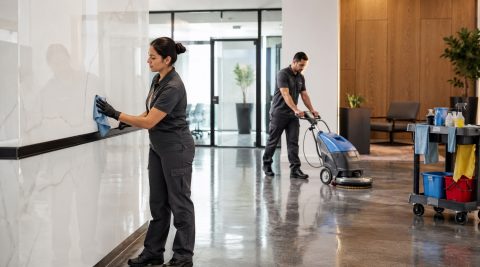
  • Reception and main lobby: daily cleaning of floors, interior glass, furniture and frequently touched surfaces.
  • Corridors and lifts: floor maintenance, removal of wear marks and cleaning of doors, mirrors and accessible fixtures.
  • Restaurant access and connecting areas: extra cleaning in the spaces with the heaviest foot traffic during breakfast and dinner times.

The scope of the project included treating 280 m² of marble flooring, mainly in the corridors leading to the rooms and part of the lobby.

The guest rooms were not part of this service, as their routine cleaning remained the responsibility of the hotel’s in-house housekeeping department.

What objectives did the client set?

Management’s main concern was keeping the common areas in good condition during the busiest period, without the cleaning tasks getting in the way of guests moving around.

The hotel needed to step up daily maintenance and restore the appearance of certain floors that had lost their lustre over time.

Based on these needs, we set three priorities: keeping shared spaces consistently clean, scheduling the work at quieter times and restoring the shine of the marble floors without closing entire floors.

The planning had to allow us to work section by section, keeping alternative routes open whenever we needed to work in through areas.

The challenge we faced before starting

The main difficulty lay in combining high hotel occupancy with the need to carry out certain tasks that required machinery and specific working times.

In a hotel full of guests, it is difficult to have spaces available for long periods. So, before starting, we assessed the condition of each surface and the options for organising the service without affecting the running of the hotel.

Initial condition and specific difficulties

During the initial inspection we found that the facilities were generally clean, although some areas showed the usual wear of a hotel with intense tourist activity. The main difficulties identified were as follows:

  • Loss of shine on the marble floors. The room corridors had a duller finish than other areas of the hotel, particularly along the busiest routes.
  • Surface marks and built-up dirt. At the entrances to the restaurant and the lobby there were shoe marks and dirt brought in from outside, which required frequent cleaning.
  • Constant guest traffic. The lifts, reception and corridors were busy for much of the day, which limited the time slots available for certain tasks.
  • Different materials and finishes. The mix of marble, glazed surfaces, metal fixtures and decorative furniture meant choosing suitable products and procedures for each material.
  • Limited availability for special treatments. Polishing the floors required temporarily cordoning off the work areas and controlling when they reopened.

The most significant situation was in the corridors leading to the rooms. Although the floors were not excessively dirty, their finish had lost some of its original shine, giving them a dull appearance that contrasted with other parts of the hotel.

This assessment allowed us to distinguish daily cleaning tasks from the work aimed at restoring the appearance of the materials.

Safety and continuity constraints

The next step was to establish how to work without creating risks for guests and hotel staff.

For routine tasks, we organised the cleaning rounds to avoid the busiest times. In areas where specific treatments were needed, we cordoned off the work sections and put up signs at the entrances.

We paid particular attention to the floors during wet cleaning and polishing, not allowing anyone through until we had checked that the surfaces were safe to use.

Keeping the hotel running shaped many of our decisions. Instead of working on entire corridors, we split the work into sections, coordinating their availability with reception and the maintenance managers.

How we organised and carried out the work

Once the needs had been identified, we drew up a plan that combined the everyday upkeep of the facilities with the floor restoration work.

The proposal set out a four-week project, with staff assigned to different time slots and close monitoring of the areas where cleaning needed to be stepped up because of foot traffic.

Shift planning

To meet the hotel’s needs, we organised a team of five professionals, split into two cleaning shifts with different roles.

The first shift ran from 6:00 to 10:00, with three staff responsible for getting the common areas ready before the busiest times. During these hours the priority was the lobby, entrances, lifts and the routes near the restaurant.

The second shift, from 15:00 to 19:00, had two professionals responsible for touching up the high-traffic areas and dealing with any cleaning needs that arose during the afternoon.

The treatment of the marble floors was organised as shorter, specific jobs, staggered over several days.

For this work we set aside time slots between 23:30 and 5:30, when there was considerably less movement in the corridors. This allowed us to work on specific sections, check the results and leave the spaces ready before the morning activity began.

Staff allocation and schedules were reviewed according to the needs of each day, especially when the hotel was expecting group arrivals or unusual guest movements.

Coordination with hotel staff

Before each phase began, we set up a communication system with the heads of reception, housekeeping and maintenance. This coordination was essential to know which areas could be temporarily taken out of use and which routes had to remain available.

At the start of each day we reviewed the planned schedule and reported the sections where special work would be carried out. This way, hotel staff could organise their own tasks and anticipate any operational needs.

During the night-time work, the maintenance team gave us access to the work areas and helped cordon off certain spaces.

For our part, we kept the hotel’s managers informed of the progress of the work and the checks carried out before reopening each section.

This communication allowed us to adapt the pace of work to the hotel’s actual activity, avoiding concentrating the work at the times when the facilities were most in use.

Monitoring high-traffic areas

One of the aspects that needed the most attention was the upkeep of the surfaces used most frequently by guests. The restaurant entrances, reception and the areas near the lifts saw particularly heavy traffic at certain times.

To keep them suitably clean, we carried out regular checks of these spaces, stepping up the cleaning whenever we spotted marks, dirt or any issue that needed attention. Monitoring focused on three aspects:

  • Floor condition: checking for surface marks, visible dirt and any wet areas.
  • Cleaning of touch points: attention to doors, lift buttons, handrails and frequently used surfaces.
  • Access conditions: making sure routes were clear and that no materials or equipment were obstructing movement.

At the end of each shift, we inspected the assigned areas and reported any issue that needed follow-up. In spaces where a polishing treatment had been applied, we checked the finish and that the floor was safe to use before removing the signs.

Results of the project

At the end of the four weeks, we reviewed the condition of the facilities and whether the objectives set at the outset had been met.

The project showed how planning adapted to the hotel’s schedule can combine daily maintenance with specific floor treatments, even during a period of high tourist occupancy.

Before and after comparison

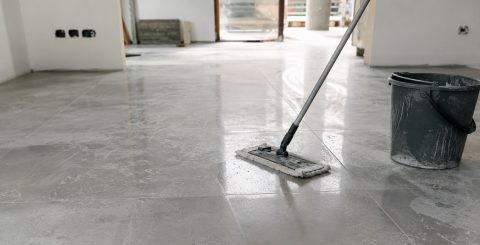
One of the most visible differences was in the room corridors where the marble had been treated. Before the work, the floor looked dull, with a noticeable loss of shine in the busiest areas. Although the floor was reasonably clean, its finish did not reflect the corridor lighting evenly.

After the initial cleaning and the floor polishing and buffing treatment, we restored a brighter and more even finish. With the shine restored, the texture and natural tones of the marble stood out better, improving the overall appearance of the indoor routes.

The treatment was carried out section by section, which made it easier to keep the different floors in use without closing all the access points at the same time.
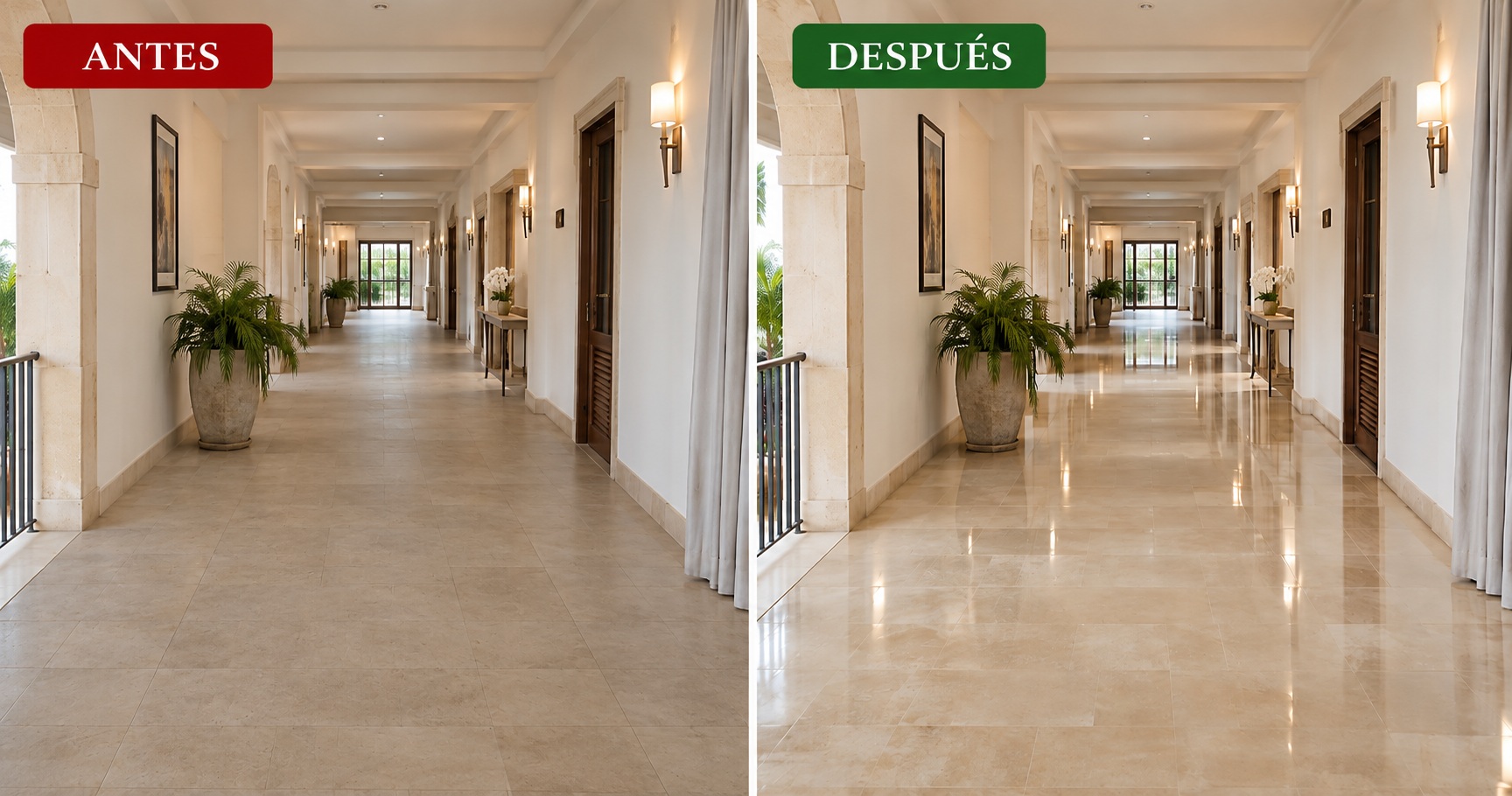
Before and after polishing the floor in a hotel in Mallorca

What improvements did we see?

The final review focused on checking the condition of the treated surfaces and assessing how well the organisation of the service had worked over the four weeks. The main results of this scenario include:

  • Shine restored to 280 m² of marble flooring. The treated corridors and sections had a more even finish, with a visible improvement in brightness and the way they reflected the lighting.
  • Upkeep of common areas while the hotel was in full operation. The shift arrangement made it possible to look after the busiest spaces without disrupting the hotel’s normal running.
  • Work organised by sections. Special tasks were staggered, keeping alternative routes open whenever an area had to be temporarily cordoned off.
  • Better coordination between teams. Communication with reception and maintenance made it easier to adapt the tasks to the hotel’s schedules and needs.
  • Follow-up of the treated surfaces. Subsequent checks allowed us to verify the finish of the floors and identify the spaces that needed more frequent maintenance.

The main conclusion was that planning the work proved just as important as the cleaning itself. Organising schedules, knowing the condition of each surface and keeping in constant contact with the hotel allowed the service to run smoothly.

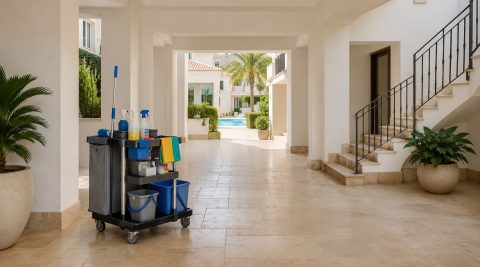
Nord Baleares: experience in hotel cleaning in Mallorca

We understand the needs of tourist accommodation and how important it is to keep facilities well cared for all year round, especially in the busiest months.

Our experience allows us to adapt professional cleaning work to the characteristics of each hotel, taking into account its schedules, the surfaces to be treated and the maintenance needs of its facilities.

If you manage tourist accommodation and need to step up its maintenance, discover our hotel cleaning services in Mallorca. We will study the features of your facilities to offer you a proposal tailored to the needs and schedules of your establishment.

Facebook
Pinterest
Twitter
LinkedIn
Entradas relacionadas
Hola, ¿en qué podemos ayudarte?