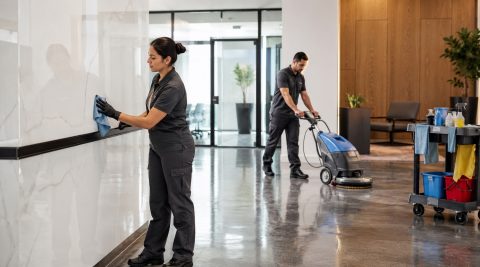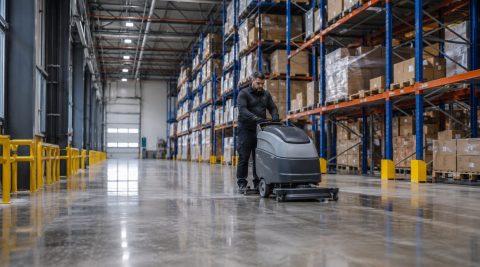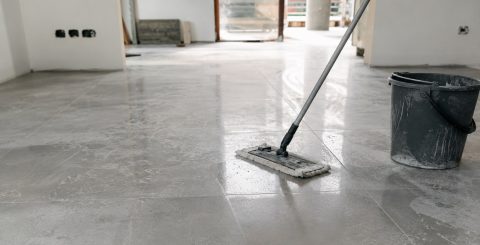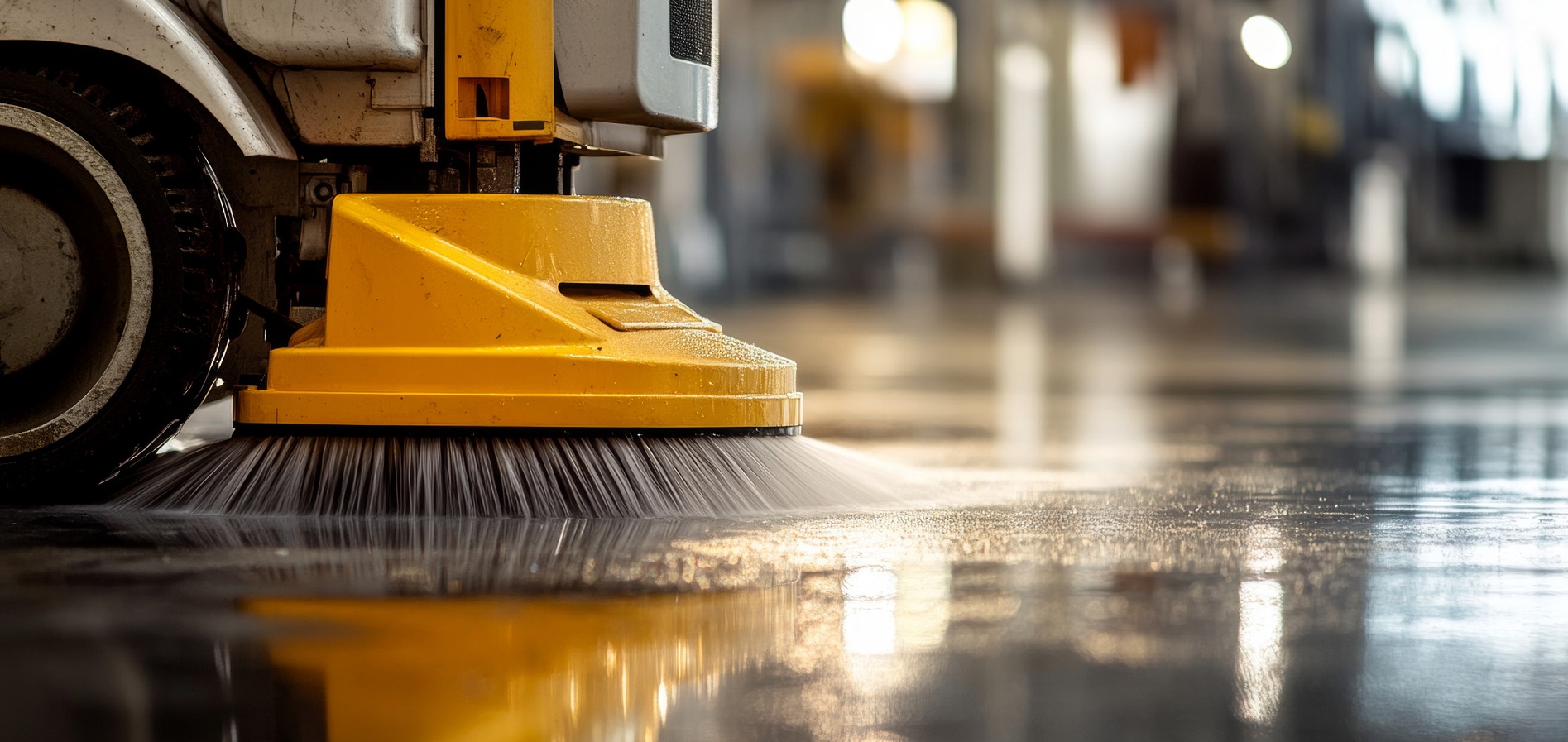
When we work in industrial facilities, we see that many problems don’t arise from a lack of cleaning on occasion, but rather from a lack of a structured approach. Therefore, a well-defined cleaning protocol for factories or warehouses helps to organize tasks, assign responsibilities, avoid improvisation, and maintain the facility in suitable condition year-round.
In an industrial building, cleanliness is noticeable when it’s lacking. A floor with accumulated dust, a messy loading area, packaging debris near an exit, or machinery with residue may seem like minor details, but on a daily basis they affect safety, workflow, and the company’s image.
A cleaning protocol for an industrial building should not be limited to stating what needs to be cleaned. It should explain how the cleaning is done, when each task is performed, who performs it, what products are used, which areas require extra attention, and how the work is documented.
Why does an industrial building need a documented cleaning protocol?
Industrial activity generates dust, waste, packaging debris, stains, machinery traffic, goods entering and leaving the premises, the use of technical products, and constant personnel movement. In this context, relying on verbal instructions for cleaning often leads to oversights, differing opinions, and areas being left out of regular maintenance.
A work document ensures the entire team operates according to the same guidelines. The company knows what tasks are being performed, the cleaning staff knows the order of operations, and the warehouse managers can verify that the service is being carried out correctly.
It also helps prevent risks. A warehouse with clear aisles, clean floors, tidy loading areas, and checked critical points reduces the chances of falls, bumps, cross-contamination, waste accumulation, or interference with production activities.
In our experience, this protocol is especially useful when there are shifts, multiple work areas, heavy machinery, storage areas, loading docks, cold storage rooms, workshops, integrated offices, or spaces with different hygiene requirements. In these cases, cleaning should be part of the facility’s maintenance, just like the inspection of equipment, doors, ventilation systems, and passageways.
What should a cleaning protocol in an industrial building include?
For the document to be useful, it must be adapted to the reality of the facility. A logistics warehouse does not function the same way as a factory, a building materials warehouse, a workshop, a food processing plant, or a production area with oils, fine dust, or specific waste.
Identification of zones and level of risk
The first step is to divide the facility into areas. This classification prevents the service from being organized in a generic way and allows prioritizing the points that require the most attention. In an industrial facility, production areas, warehouses, offices, changing rooms, restrooms, cafeterias, loading docks, outdoor areas, parking lots, technical rooms, and waste disposal areas may all coexist.
Each area should have an assigned level of cleaning requirements. Not all areas need the same frequency or type of cleaning. A daily traffic corridor, a handling area, a dry goods warehouse, or an administrative office have different needs. A practical way to organize this is to classify the areas according to three criteria:
- Risk of accident: slippery floors, trolley traffic areas, stairs, ramps, docks or access points.
- Hygiene risk: toilets, changing rooms, dining rooms, frequent contact points, handling areas or areas where waste may accumulate.
- Operational risk: areas where dirt may affect the operation of machinery, goods, packaging, production lines or working times.
This classification helps decide where to act daily, which areas can have a weekly frequency and which spaces require technical or periodic cleanings.
Cleaning frequency by work area
An industrial facility needs realistic frequencies. Creating an overly ambitious protocol is of little use if it can’t be met due to scheduling, workload, or production interference. The best approach is to establish daily, weekly, monthly, and one-off tasks.
- Daily tasks usually focus on passageways, access points, restrooms, changing rooms, offices, waste removal, emptying bins, cleaning contact points and checking floors with higher traffic.
- Weekly tasks may include deeper cleaning of warehouses, accessible shelving, loading areas, doors, interior glass, signage, technical furniture, support surfaces, and shared spaces.
- Monthly or periodic actions may include high -rise cleaning, removal of accumulated dust from structures, inspection of gutters, cleaning of accessible light fixtures, mechanical treatments or polishing of floors, cleaning of outdoor areas or specific actions depending on the type of activity.
The important thing is that each frequency is associated with a specific task. Cleaning the warehouse is too broad a term. In contrast, mechanical sweeping of aisles, mopping of loading areas, removal of packaging waste, and cleaning of floor markings are much easier to control.
Authorized products, machinery and methods
The protocol should specify which products can be used and in which areas. In industrial settings, it is common to work with degreasers, technical detergents, professional disinfection of workspaces, floor cleaning products, scrubbing machinery, industrial vacuuming, pressure washers, hand tools, and specific equipment depending on the type of surface.
It’s best to avoid letting each operator choose the product on their own. Incorrect use can damage flooring, generate unnecessary fumes, leave residues, affect sensitive materials, or create hazardous situations. Therefore, we recommend including:
- Authorized product: must be clearly identified and associated with its main use.
- Permitted surfaces : not all products are suitable for concrete, resin, metal, glass, tile, stainless steel or painted surfaces.
- Dilution or method of application: an incorrect dose may reduce effectiveness or generate residues.
- Action time: some products need a minimum amount of time to be effective.
- Precautions for use: ventilation, gloves, goggles, wet floor signage or access restrictions.
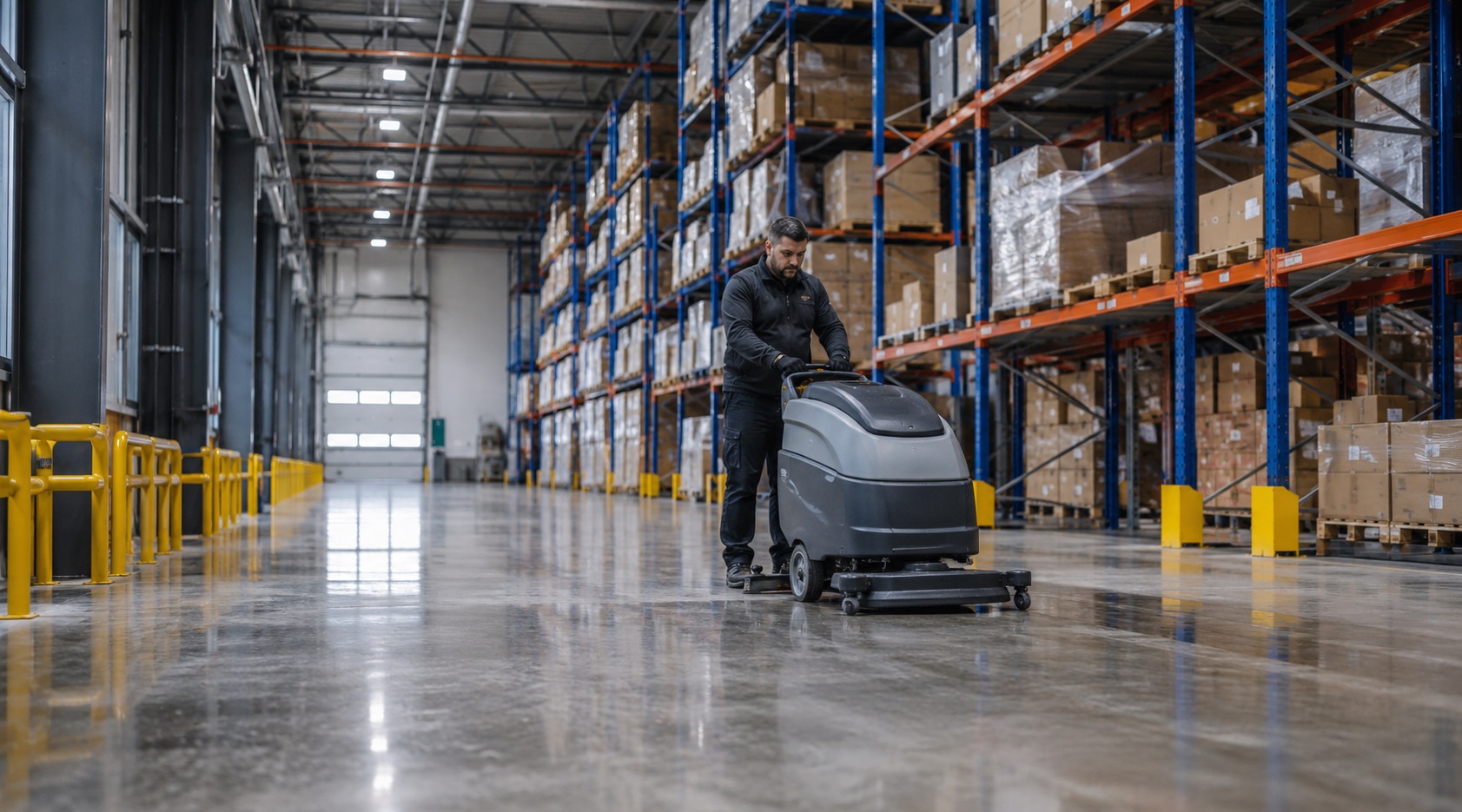
The machinery must also be specified. An industrial floor scrubber might be very effective for large surfaces, but it may not be suitable for an area with wiring, obstacles, slopes, or sensitive materials. Therefore, the method must be adapted to each space.
Responsibilities, shifts and coordination with the activity
A good protocol specifies who performs the cleaning, who supervises the service, and when each task is carried out. In warehouses with continuous activity, this coordination is key to avoiding collisions with forklifts, production interruptions, blocked access points, or wet areas during peak traffic hours.
When working in industrial facilities, we typically schedule service according to off-peak hours. This could be before opening, at closing time, between shifts, or during time slots agreed upon with the maintenance manager.
It is also important to define how incidents are reported. For example, if a spill, break, accumulation of waste, inaccessible area, or urgent cleaning need is detected, the protocol should indicate who is informed and how it is recorded.
This section of the document prevents misunderstandings. Cleaning is no longer based on improvised instructions but becomes part of the ship’s normal operations.
Records, controls and evidence of the service
Documentation is an essential part of industrial building maintenance. It’s not enough to simply perform the tasks: it’s important to be able to demonstrate when they were done, who performed them, and if any issues arose.
Records can be simple. A control sheet, a digital checklist, a daily signature, photographs of special tasks, or an incident report may suffice depending on the size of the facility. The protocol should include:
- Date and time of service: allows you to check if the planned frequency is being met.
- Area worked on : avoids doubts about which areas have been cleaned.
- Task completed : specifies the work performed.
- Person in charge of the service: identifies who has performed or supervised the action.
- Issues detected: record any obstacles, exceptional dirt, spills, blocked areas or maintenance needs.
These records help in internal audits, inspections, coordination with risk prevention, quality reviews and control of the external cleaning provider.
Regulatory aspects to consider
Industrial cleaning is related to workplace safety, risk prevention, the use of chemical products, and the maintenance of workspaces. Therefore, although each sector may have specific requirements, there are general criteria that should be integrated into any protocol.
The goal is not to turn the document into a legal manual, but to reflect that cleaning is organized with technical, safe and verifiable criteria.
Safety and health in the workplace
Workplaces must be kept in a suitable state of order, cleanliness, and maintenance. In an industrial building, this translates into walkable floors, clear aisles, unobstructed exits, organized loading areas, controlled waste, and surfaces that do not pose unnecessary risks.
A well-designed protocol should pay attention to areas where dirt can cause accidents. Grease stains, accumulated dust, packaging debris, spilled liquids, or objects out of place can cause falls, bumps, trips, or interference with machinery.
Therefore, we recommend that the document include procedures for rapid response to spills or hazardous waste. It should also establish a routine for inspecting critical areas, especially walkways, ramps, stairs, loading docks, access points, and shared spaces.
Use of chemicals and protective equipment
Cleaning factories and warehouses may require chemical products with varying concentration levels. When using technical detergents, degreasers, disinfectants, or substances with associated risks, the protocol must specify clear safety measures.
Staff must know what product they are using, its purpose, how to apply it, and what protection is required. Many tasks will require the use of gloves, appropriate footwear, goggles, a mask, work clothes, or other specific protective equipment depending on the product and the environment.
It is also advisable to keep the technical data sheets and safety data sheets for the products used. These documents allow you to consult information on risks, incompatibilities, first aid, storage, and conditions of use.
In environments with poor ventilation, machinery, or simultaneous activity from other workers, planning becomes even more important. Not all products can be applied at any time or in any area.
Cleaning of machinery, access points and transit areas
Industrial machinery requires careful handling. In some cases, cleaning staff should only clean external surfaces, perimeter floors, or auxiliary areas. In others, technical cleaning must be carried out by trained personnel or maintenance teams.
The protocol must clearly differentiate what cleaning equipment can handle and what tasks fall under the purview of maintenance, production, or specialized personnel. This separation prevents damage, improper handling, and electrical, mechanical, and chemical hazards.
High-traffic areas deserve special attention. Aisles, loading docks, ramps, doors, loading areas, and entrances are spaces where people, forklifts, goods, and vehicles converge. Poorly planned cleaning can lead to wet floors during peak hours, temporary obstacles, or disruption to operations.
Therefore, in these areas it is advisable to define schedules, signage, drying times and coordination with the person in charge of the building.
How to adapt the protocol according to the type of ship or factory
Each facility has a different way of getting dirty. Dust, grease, humidity, debris, traffic, loads, and the type of product stored completely change the organization of the service.
Therefore, before drafting the protocol, we conduct a review of the facility and assess how each space is used. From there, priorities, resources, and frequencies are defined.
Logistics warehouses and storage facilities
Cleaning must coexist with the flow of goods in and out, packaging, pallets, forklifts, picking areas, loading docks, and shelving. The main challenge is usually keeping walkways clear and controlling the accumulation of dust and debris.
The protocol must reinforce the removal of film, cardboard, strapping, packaging debris, and dirt generated by the movement of goods. It must also include the cleaning of loading docks, sectional doors, loading areas, and points where dust may enter from the outside.
In these spaces, order is as important as cleanliness. A clean aisle but one obstructed by pallets out of place is still a risk. Therefore, this document must be coordinated with internal storage and circulation regulations.
Productive environments
In a factory, cleanliness is directly related to the continuity of production. The presence of raw material remnants, dust, oils, shavings, technical waste, or dirt in areas near machinery can affect daily operations.
The protocol must define which areas are cleaned during the activity, which require a shutdown, what tasks are performed between shifts, and what actions must be coordinated with maintenance. This organization prevents cleaning from interfering with production or being carried out unsafely.
It’s also advisable to separate routine tasks from technical cleaning. Sweeping, mopping, waste removal, and cleaning common areas can be part of the regular service. Internal cleaning of machinery, ducts, technical systems, or areas with specific risks may require specialized personnel.
Food industries or spaces with higher hygiene requirements
When the facility is involved in food handling, packaging, or the production of sensitive products, the protocol must be more stringent. Cleaning procedures must include clean zones, dirty zones, prevention of cross-contamination, authorized products, more detailed record-keeping, and verification of results.
In these cases, simply cleaning at the end of the day is not enough. Routine cleaning must be established in phases, taking into account shift changes, contact areas, work surfaces, floors, drains, tools, access points, and auxiliary spaces.
The document must be adapted to the company’s quality and hygiene systems. If there are audits, internal controls, or industry requirements, the cleaning protocol must align with them to become part of the facility’s management system.
Common mistakes when organizing industrial cleaning
- One of the most common mistakes is treating an industrial building as if it were a large office. The scale, risks, waste, surfaces, and work rhythms are different. Therefore, the service must be designed based on the specific characteristics of the facility.
- Another common mistake is establishing a generic maintenance schedule for the entire facility. Some areas require daily inspections, while others can be maintained with periodic maintenance. Applying the same criteria to the entire space often leads to cost overruns in some areas and a lack of maintenance in others.
- We also see protocols that don’t specify products, machinery, or methods. This leads to inconsistencies between operators, inconsistent results, and potential damage to surfaces. Industrial cleaning requires clear criteria, especially when technical flooring, resins, polished concrete, machinery, or chemicals are involved.
- The lack of records is another weakness. Without evidence, it’s difficult to know if a task has been completed, when an issue was detected, or which areas were left untouched due to lack of access.
- Finally, it’s important to avoid planning cleaning without consulting production, maintenance, or safety. In an industrial facility, all these departments are interconnected. The protocol should be integrated into the company’s operations, not imposed as an isolated task.
How we work on the cleaning of industrial buildings in the North Balearic Islands
We understand industrial cleaning as part of facility maintenance. Our job is to help make the facility safer, more organized, and more functional for those who work there every day.
We work with clear protocols, defined frequencies, appropriate products, and coordination with those responsible for the facility. This way, the service can be integrated into daily operations without causing unnecessary disruptions.
If a company needs to organize the cleaning of a factory, warehouse, logistics center or industrial facility in Mallorca, at Nord Baleares we can help you define a professional, flexible service tailored to the real needs of your business.