Cleaning oil from a garage floor is one of those tasks that seems simple but quickly becomes complicated when the stains penetrate the cement or concrete. Motor oil, grease, and fuels leave dark marks that are difficult to remove, especially if hours or days have passed since they spilled.
Whether it’s a private garage or a communal parking area, acting promptly and using the right products is key to preventing permanent damage to the flooring. Furthermore, not all floors react the same way, which is why it’s important to know the correct methods, the most effective products, and the professional equipment that actually works and that we use for cleaning communal garages in Mallorca.
Why is it so difficult to clean oil stains in garages?
Oil stains are one of the most common problems in private and communal garages, but also one of the most difficult to remove. The main reason is that oil doesn’t just stay on the surface: it quickly penetrates the pores of the pavement, especially if it’s cement or concrete. This causes the dirt to become embedded, darkening the affected area and creating persistent marks that don’t disappear with a simple surface cleaning.
In addition, heat, humidity, and constant vehicle traffic cause the oil to spread or become even more embedded, complicating cleaning if action is not taken immediately.
Engine oil, grease and fuels
These products can degrade or discolor certain materials, especially painted or sealed garages, so they require controlled cleaning methods and specific products to avoid further damage.
- Motor oil is especially difficult to clean because it’s formulated to withstand high temperatures and friction, making it a thick, sticky, and highly penetrating product. When it spills on the garage floor, it adheres quickly and leaves dark stains that won’t come off with water or ordinary detergents.
- Grease, on the other hand, contains even denser compounds that form compact layers that are difficult to dissolve without the use of powerful degreasers.
- Fuels, such as gasoline or diesel, also create complex stains due to their ability to evaporate quickly, leaving oily residues that penetrate deep into the pavement.
Types of garage floors
The type of flooring greatly influences the difficulty of removing oil stains from parking spaces. It is essential to choose the appropriate method based on the type of pavement, avoiding improvising with household products that could worsen the problem.
- Untreated cement or concrete garages are the most problematic, as their porous surface quickly absorbs liquids. A stain not cleaned promptly can penetrate several millimeters into the pavement, requiring the use of industrial degreasers or specialized machinery for restoration.
- In contrast, floors painted with epoxy resin, tiles, or sealed paving are more resistant to oil penetration, but they are not immune. Stains usually remain on the surface, but harsh chemicals can damage the protective layer if not applied correctly.
How to clean the parking lot floor step by step
It requires a methodical approach and the use of appropriate products to prevent the pavement from being marked. Below, we explain how to remove it step by step to achieve truly effective results.
Remove the excess and act quickly
When the stain is fresh, the oil hasn’t fully penetrated the floor, so absorbing as much as possible from the start will greatly facilitate the process. To do this, it’s recommended to cover the spill with absorbent paper, old rags, or even cat litter, which acts as a natural absorbent.
Once you’ve removed the excess, it’s crucial to prevent the oil from spreading. Don’t rub, as this will only make it stick deeper. Instead, gently press to absorb the excess, then remove the tool.
This first step reduces the difficulty of cleaning by up to 50% and prevents the stain from leaving permanent marks on the pavement.
Effective products
There are several household products that work very well for fresh stains.
- Baking soda is one of the most useful: it acts as an absorbent and deodorizer. Simply sprinkle a generous amount onto the stain, let it sit for a few minutes, and then gently scrub with a brush.
- Sand is also an excellent alternative, especially for rapid absorption in cement garages.
- For tougher stains, a concentrated dish soap can help break down grease. It’s recommended to mix it with hot water and apply it to the affected area, letting it sit for a few minutes before scrubbing.
- And if the stain persists, industrial degreasers are the most effective option: they are formulated to dissolve traces of engine oil and fuels without damaging the pavement.
These products penetrate the pores of the cement and release the embedded grease, making it easier to remove with water or professional machinery.
Remove dried or encrusted oil from the floor
In these cases, the stain has already penetrated deeply, and basic methods are usually insufficient. The most effective technique involves applying a degreaser specifically designed for garage floors, letting it work for the time indicated by the manufacturer, and then scrubbing vigorously so that the product reaches deep into the cement pores.
For particularly old stains, a two-step process may be necessary: applying liquid or powder absorbents that draw the oil out of the pavement, and then repeating the process with a degreaser to complete the cleaning. In untreated concrete garages, this procedure is often essential.
When even these methods don’t work 100%, the safest and most effective solution is to use professional machinery such as floor scrubbers or pressure washers that use pressure and specialized detergents to restore the floor to its original appearance.
Cleaning tough stains in communal garages
These spaces are shared and are usually subject to internal regulations and collective decisions. Because they are large areas with paving that is more susceptible to wear, any work must be carried out in a controlled manner to avoid damage or visible unevenness in the floor.
Rules and responsibilities in homeowners’ associations
In most homeowners’ associations, each resident is responsible for cleaning their own parking space, including removing spills and stains caused by their vehicle. However, when oil spills in common areas such as hallways, ramps, or walkways, the responsibility usually falls to the association, which must determine whether a one-off cleanup or a more thorough professional intervention is necessary. These obligations are typically outlined in the bylaws or in agreements adopted at a meeting.
Acting quickly prevents conflicts between neighbors and incidents. Accumulated oil can cause slips or create an unhygienic environment, and some municipalities may even fine communities that do not maintain their facilities properly.
Therefore, it is recommended that cleaning in residential communities have a clear maintenance protocol that guarantees the proper upkeep of the garage.
Recommended products for cleaning oil from garage floors
Not all floors react the same way, nor do all stains require the same treatment, so it’s important to know which products work best in each situation.
Industrial degreasers
These are the most effective products for removing motor oil and encrusted grease , as they are formulated to break down the oil’s structure and dissolve it even after it has penetrated the pavement. Unlike household cleaners, these products have a much higher concentration and act directly on the pores of the cement, allowing the oil to rise to the surface for removal with water or professional machinery.
Apply directly to the stain and let it sit for a few minutes before brushing. In high-traffic garages or those with old stains, this type of degreaser is practically essential.
However, it must be used following the manufacturer’s instructions to avoid damage to delicate floors.
Special oil absorbents
Like industrial granules, absorbent clays or mineral powders are an excellent option when the stain is fresh or still wet. Their main function is to absorb the oil before it penetrates the pavement, thus preventing the stain from setting in. They are especially useful in communal garages, where spills are frequent and it’s important to act quickly.
These absorbents are spread over the spill and left to work for the necessary time. They are then easily collected with a brush or shovel. While they don’t completely eliminate the residue on their own, they significantly reduce the amount of oil to be treated, making subsequent steps with degreasers or machinery easier. They are the first line of defense for any fresh spill.
Neutralizers for stubborn stains
These products are designed for oil stains that have penetrated deeply into the cement or that cannot be removed using conventional methods. They work by chemically altering the oil residue, allowing for its removal even months after the spill . They are especially useful on highly porous floors or in older garages where stains often penetrate the surface layer of the pavement.
They are easy to use: apply them to the stain, leave them for the recommended time, and then remove them with water or brushes. In many cases, they are used as a final step to remove the darkening that remains after degreasing.
Professional parking lot cleaning machines
Cleaning parking areas, whether in private or communal garages, requires tools capable of removing ingrained dirt, accumulated dust, and oil stains that cannot be removed manually. Professional machines allow for deeper, more even, and longer-lasting results.
Industrial floor scrubbers
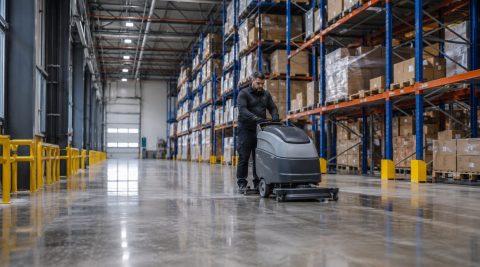
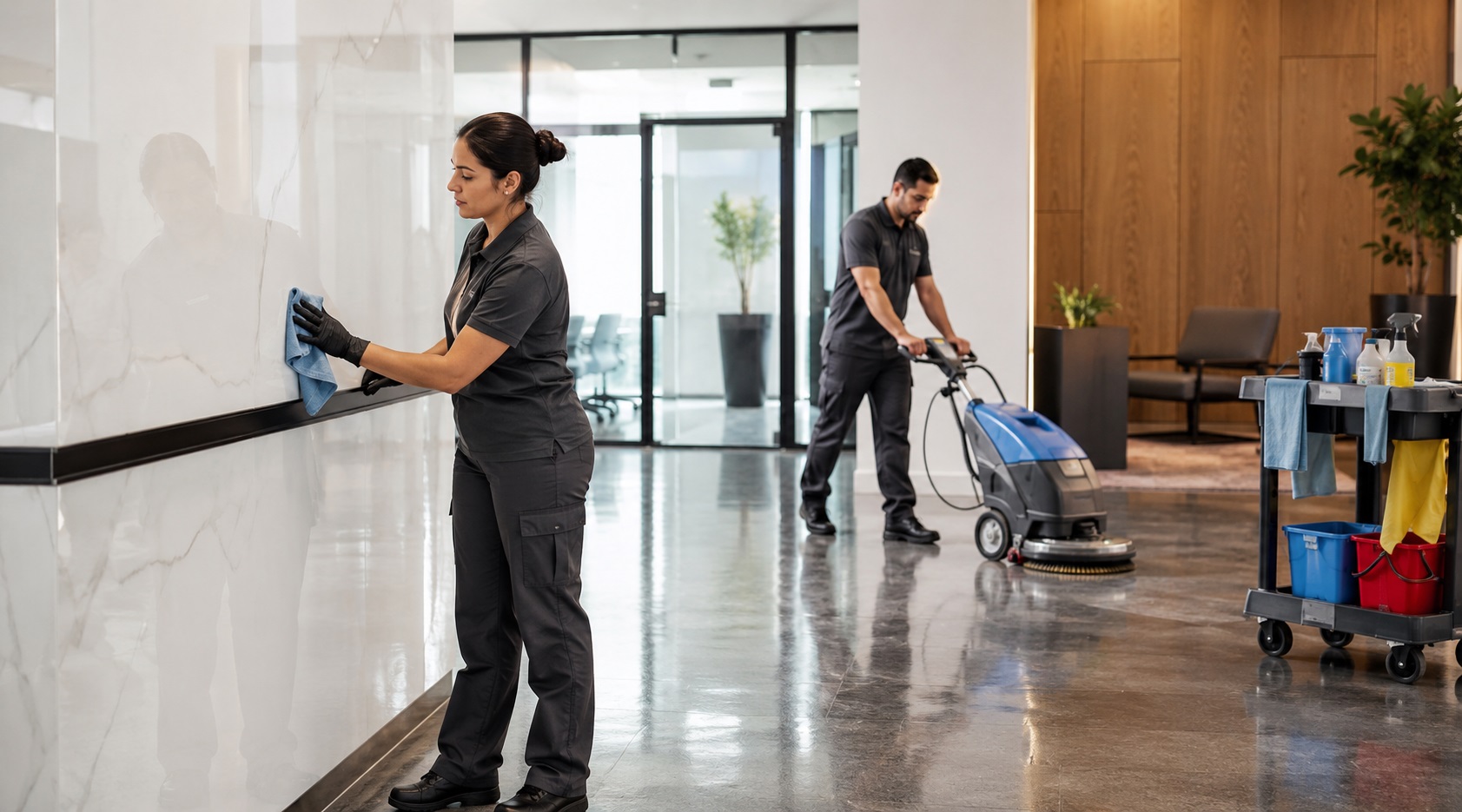
They are, without a doubt, the most effective tool for deep cleaning parking lots. They work using a system that combines water, detergent, and mechanical pressure via rotating brushes. This allows them to loosen accumulated dirt, eliminate grease residue, and restore uniformity to the pavement. Their action is especially effective on porous cement floors, where stains tend to penetrate deeply.
Another advantage is that they vacuum up dirty water while mopping, leaving the floor virtually dry and preventing slips in high-traffic areas and parking garages. Thanks to their efficiency, they can cover large surfaces quickly, making them the preferred choice for property managers and companies that maintain communal garages.
Pressure washers for cement
These machines are very useful for removing oil stains, ingrained dirt, and fuel residue from untreated concrete floors. Their ability to work with hot water further increases their effectiveness, as the heat helps break down the grease before removal. This type of machine is essential when stains have been stuck to the pavement for a long time and don’t respond to basic degreasers.
However, they must be used in a controlled manner. Excessive pressure can erode cement, lift paint, or damage the seal in garages with treated flooring. Therefore, it is always advisable to regulate the pressure and use them with detergents specifically designed for garages. In professional hands, pressure washers offer far superior results to those a home user can achieve.
Industrial vacuum cleaners and sweepers
Industrial vacuum cleaners are essential for removing dust, sand, solid debris, and particles that accumulate in garages daily. Unlike domestic vacuum cleaners, they have more powerful motors and special filters capable of picking up heavy debris without losing suction. They are especially useful before applying degreasers or using a floor scrubber, as they allow you to clean the surface and prevent dirt from mixing with the mopping water.
Sweepers, whether manual or automatic, allow you to cover large areas in a very short time. Their brush system effectively removes dust, leaves, metal debris, or gravel that typically accumulates in underground parking garages.
Advantages of calling a professional company
Oil stains, fuel residue, and ingrained dirt require specific techniques and machinery that are not usually available to the average person. For homeowners’ associations, businesses, or private parking lots, outsourcing cleaning is the safest, most efficient, and most cost-effective option.
Professional machinery
A specialized company has machinery not found in domestic settings, such as industrial floor scrubbers, pressure washers, high-powered vacuum cleaners, and automatic sweepers. These machines can remove deep stains, ingrained grease, and accumulated dirt with an efficiency impossible to match manually.
Approximate costs
Although hiring a professional cleaning company involves an expense, it’s much more reasonable than many people imagine. One-off cleanings of oil or grease stains are usually affordable, especially for small jobs. In communal parking garages, the costs are shared among the owners, making the investment minimal compared to the benefits.
Furthermore, professional intervention prevents larger expenses resulting from damage to the pavement, uneven wear, or unnecessary repainting. In this sense, the cost not only covers cleaning but also the prevention of future repairs.
Time saving
Cleaning a garage effectively can take hours if done manually, especially when stains are old or the floor is very dirty. A professional company completes this job in a fraction of the time thanks to the use of high-performance machines, specialized products, and experienced staff. This allows you to quickly restore your garage to use without prolonged disruption.
In communities or businesses, the time savings are even more significant. By eliminating the need to coordinate neighbours, tools, and products, the process becomes much faster and more efficient. The company takes care of everything, from preparing the area to waste removal, guaranteeing a fast and hassle-free service for users.
Greater effectiveness on stubborn stains
Old oil stains can be virtually impossible to remove with home remedies. A professional company uses industrial degreasers, neutralizers, and equipment that penetrates the pores of the cement to extract the grease. This ensures a much more effective result and prevents dark rings or visible marks.
Nord Baleares: specialists in deep garage cleaning in Mallorca
We have the experience, machinery, and professional products needed to restore any garage to its best appearance, whether it’s a private parking space or a community garage. Our team specializes in removing tough oil, grease, and fuel stains, guaranteeing impeccable results in less time.
We tailor each cleaning to the type of flooring to ensure a thorough clean without damaging the surface. Whether it’s a single stain or a complete cleaning of an entire parking garage, we offer a fast, safe, and fully professional service.
Contact Nord Baleares and request your free quote: we’ll be happy to help you keep your garage clean, safe and in perfect condition.